

Your cart
There are no more items in your cart
- New

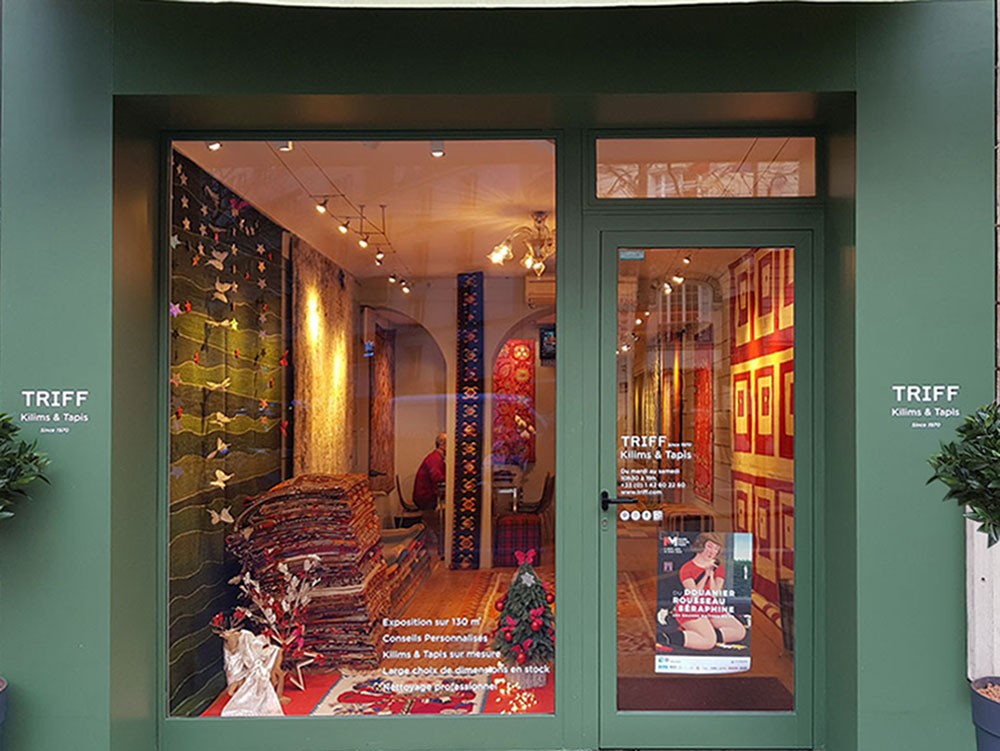
A specialist in kilims since the early 1970s, the TRIFF gallery has largely contributed to making these weavings known in France and Europe. Since its creation, the gallery has always favored the criteria of quality, authenticity, aesthetics and originality for the choice of its kilims.
Do you know the ancestral art of the kilim? Find out more about this weaving technique that tells a beautiful story.
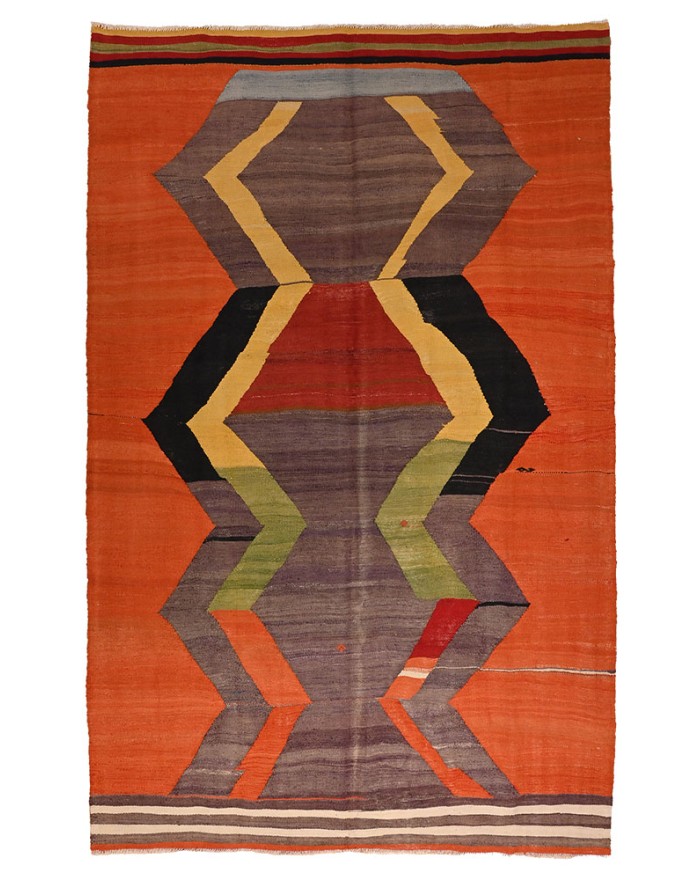
Mid-20th century kilim, from south-west of Turkey
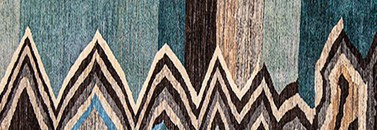
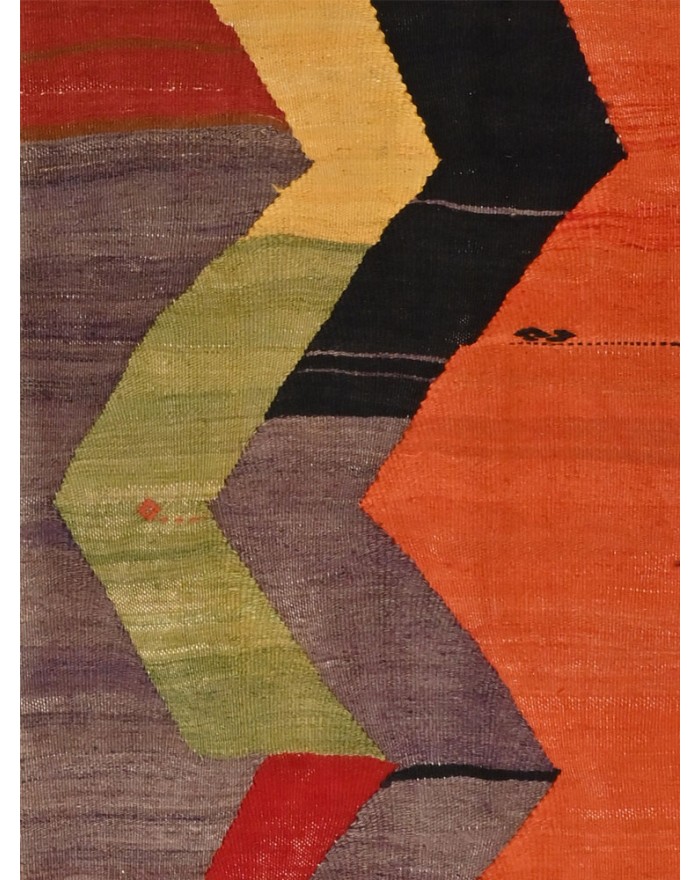
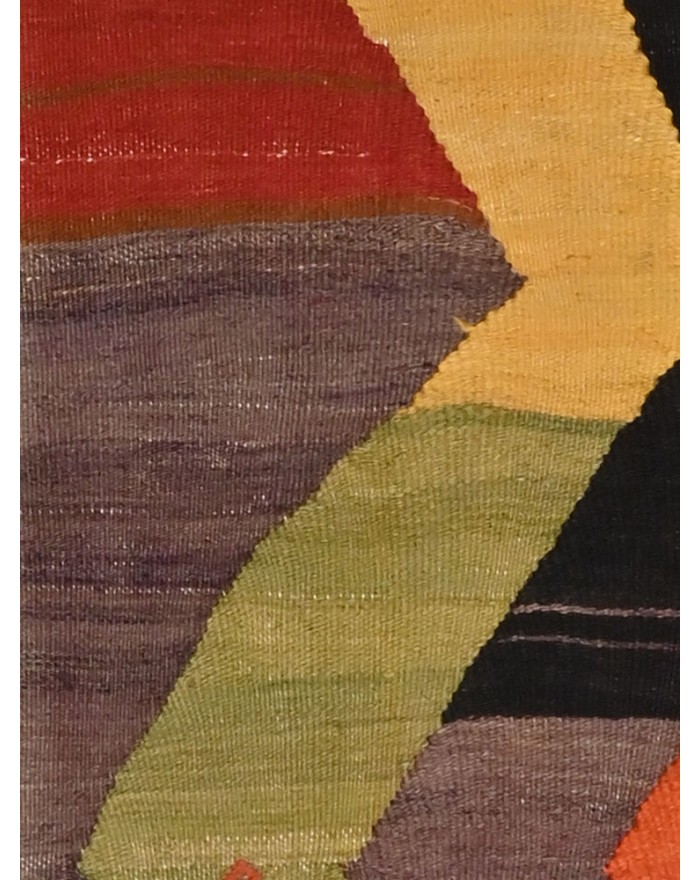
This kilim stands out for its graphic monumentality: a large central symmetrical motif, almost totemic, rises like a split hourglass. The colors are powerful, contrasting — burnt orange, deep violet, charcoal black, garnet red, moss green. Each hue unfolds in broad angular bands, juxtaposed with rare boldness.
The lower border, made of horizontal bands, calms the tension of the central design, almost like lines of musical grounding.
This weaving bears witness to great formal freedom. It is at once vibrant, fragmented, and surprisingly structured. One senses a kind of visual experimentation embraced by the weaver, with a singular intuition for composition.
It is a work of tension and rhythm, born from the hand of an anonymous woman, and yet strangely contemporary.
Kilims from the Milas region are woven from medium-weight wools.
The motifs are generally quite minimalist.
Very often, the center is a large flat area of red, with green "finger" motifs on the sides and more or less stylized stripes at either end.
Occasionally, a few motifs float in the center.
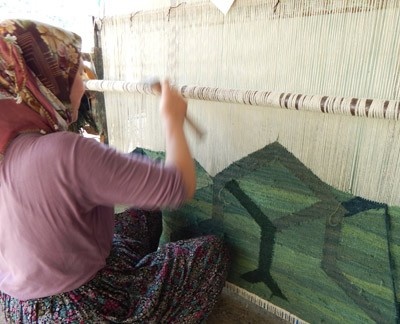
Weaving: Women learned the art of kilim weaving from their mothers or grandmothers.
Kilims were woven by hand, using hand-spun wool, which they dyed as they went along.
Patterns and colors: Each region had its own way of spinning wool, its own patterns and its own palette of colors.
These antique kilims were intended for domestic use.
They were woven without drawing boards, which adds a real personal touch and makes them unique pieces.
Their beauty depends on the way the weaver has interpreted the motifs and combined the colors.
That's why we choose our kilims one by one, to select only the most beautiful.
Data sheet
Every day: you can vacuum, but not at minimum power. Avoid vacuum cleaners with rotating brushes.
Liquid spills: mop up as much liquid as possible and rub gently with a damp cloth.
Grease stains: soak up as much grease as possible with paper towels or terre de Sommières.
Accidents involving animals: in this case, it's very important to act quickly, as animals release acids that will damage wool. Treat your kilim following the same advice as for spilled liquids.
For a more thorough cleaning: it may be that the stains have not been completely treated, or that over the years, despite regular maintenance, dust has settled in and a grey veil has set in. In such cases, it's time to turn to a professional.
That's why we offer a cleaning service, carried out by a company specialized in manual and wet carpet cleaning.
No comment at this time.
You Must Login To Review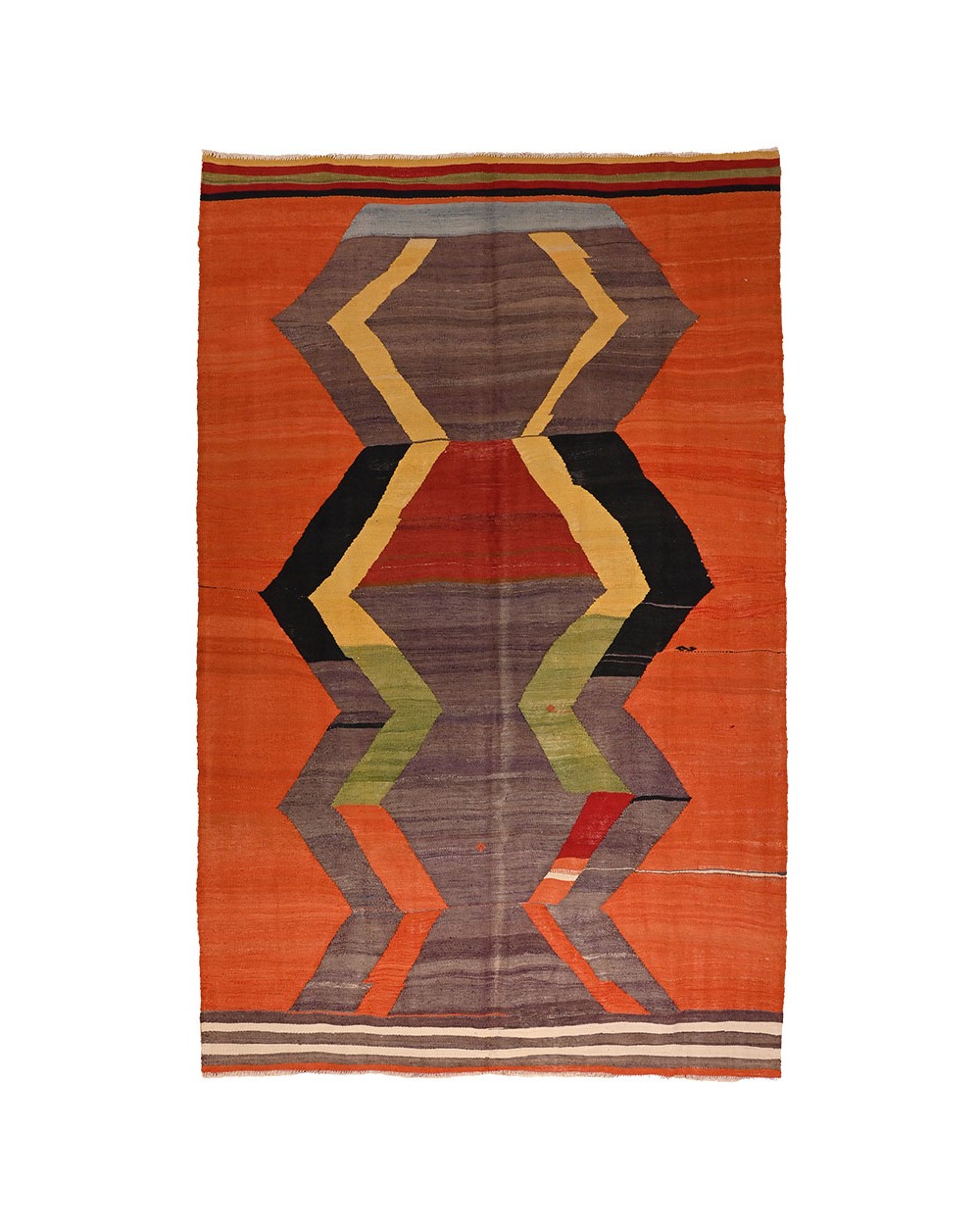
Kilims from the Milas region are woven from medium-weight wools.
The motifs are generally quite minimalist.
Very often, the center is a large flat area of red, with green "finger" motifs on the sides and more or less stylized stripes at either end.
Occasionally, a few motifs float in the center.
Weaving: Women learned the art of kilim weaving from their mothers or grandmothers.
Kilims were woven by hand, using hand-spun wool, which they dyed as they went along.
Patterns and colors: Each region had its own way of spinning wool, its own patterns and its own palette of colors.
These antique kilims were intended for domestic use.
They were woven without drawing boards, which adds a real personal touch and makes them unique pieces.
Their beauty depends on the way the weaver has interpreted the motifs and combined the colors.
That's why we choose our kilims one by one, to select only the most beautiful.