Collector’s pieces

The art of kilims, symbolic support for ancient cultures

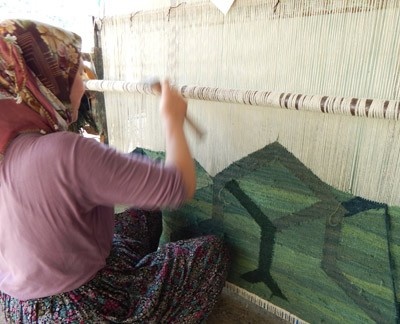
The kilim is a rural art form handed down from mother to daughter. Each region or tribe has its own interpretation of the motifs, its own wools and its own preparation. Collector's kilims are specific in that they were woven before the arrival of chemical dyes, so the wools were dyed with vegetable dyes. Vegetable colors are characterized by their density and brilliance, which have been preserved over time, and by the systematic use of indigo blue.

Brand:

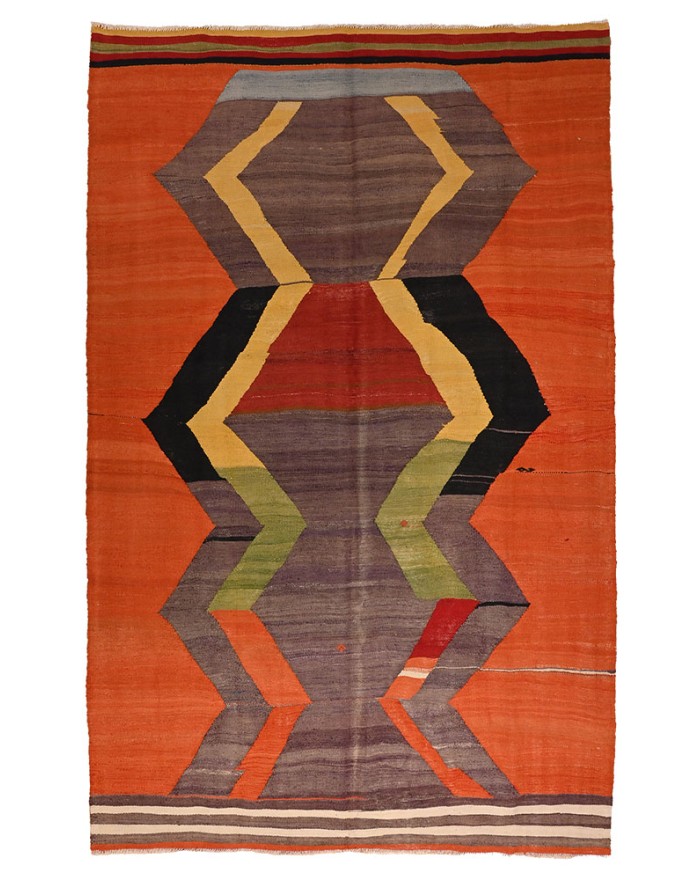
MUB241144  -  267 x 170 cm
€3,500.00

Mid-20th century kilim, from south-west of Turkey

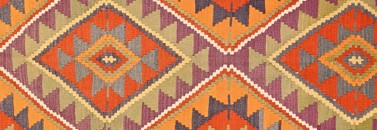
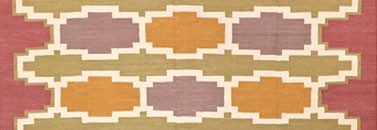
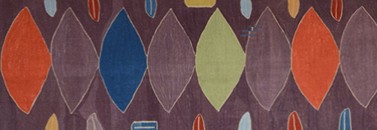
This kilim stands out for its graphic monumentality: a large central symmetrical motif, almost totemic, rises like a split hourglass. The colors are powerful, contrasting — burnt orange, deep violet, charcoal black, garnet red, moss green. Each hue unfolds in broad angular bands, juxtaposed with rare boldness.

The lower border, made of horizontal bands, calms the tension of the central design, almost like lines of musical grounding.

This weaving bears witness to great formal freedom. It is at once vibrant, fragmented, and surprisingly structured. One senses a kind of visual experimentation embraced by the weaver, with a singular intuition for composition.

It is a work of tension and rhythm, born from the hand of an anonymous woman, and yet strangely contemporary.

Brand:

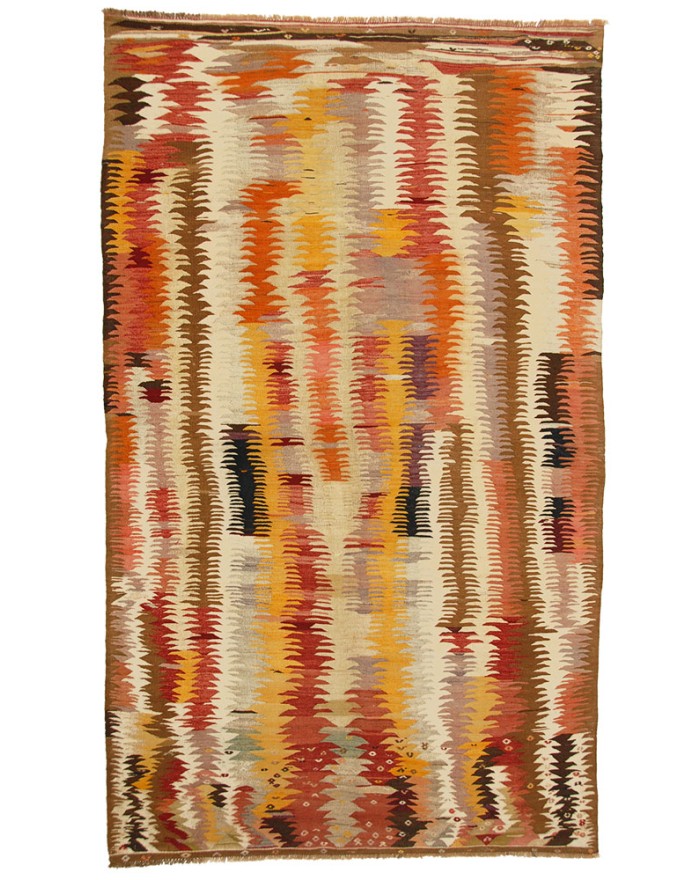
NED090121  -  234 x 145 cm
€3,200.00

Mid-20th century kilim, from south-west of Turkey

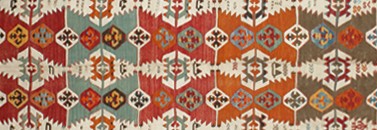
The composition is built on a succession of small triangular and “claw-shaped” motifs arranged vertically, like frequencies on an audio graph or vibratory pictograms. Each column seems independent, yet together they resonate with harmonic coherence.

The palette is a festival of warm and pastel tones — ochres, orange-reds, saffron, lavender, salmon pink — tempered by a few deep blacks and muted beiges.

Though structured, the design gives the impression of constant movement: a luminous buzzing, an energy humming through the textile.

Brand:

NED041142  -  199 x 166 cm
€2,800.00

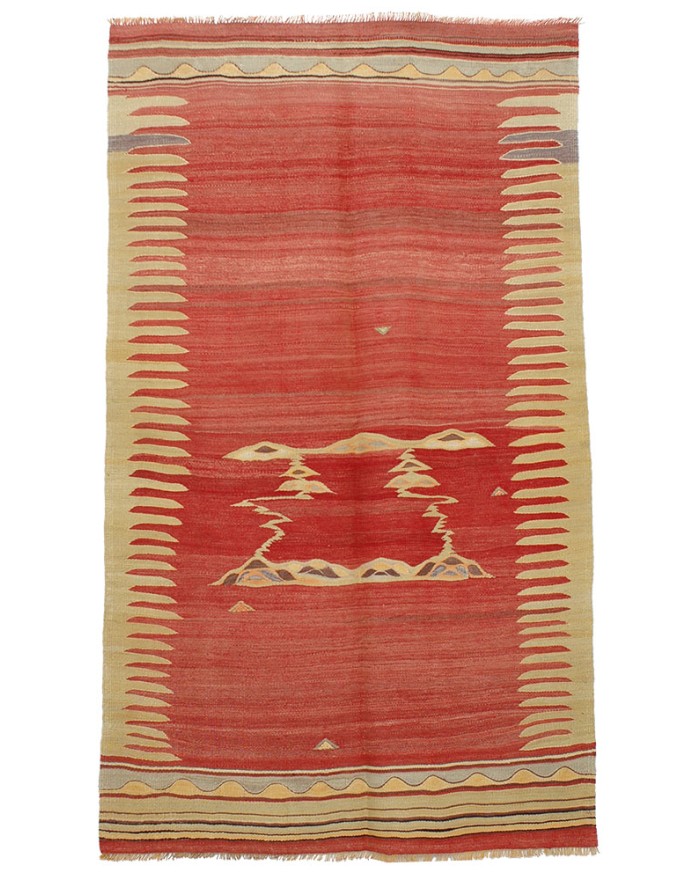
Kilim Mid-20th-century, from southwestern Turkey

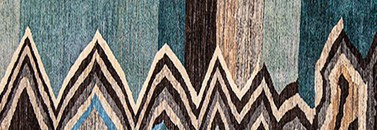
At first view, this kilim follows a well-known regional tradition: a nuanced brick-red background, enlivened by a few scattered motifs, almost suspended in mid-air. But here, the weaver has taken an unprecedented step. Instead of a minimalist design, she has created a sort of abstract landscape at the center of the piece—like a woven daydream. One can make out zigzag shapes evoking trees, stylized mountains, perhaps even floating clouds.

A one-of-a-kind piece, this kilim is a truly unique work of art, in which the weaver breaks free from all the conventions of her cultural environment.

Brand:

HM21093  -  233 x 174 cm
€4,800.00

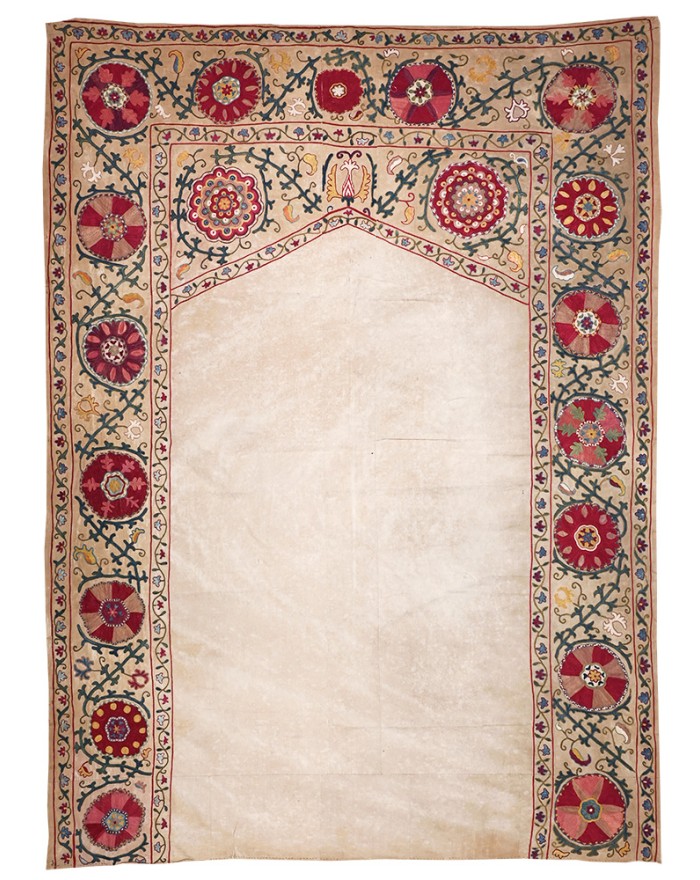
Suzani late 19th century,

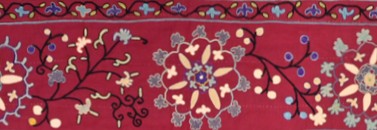
Used as a wedding cloth symbolizing a passage.These large suzanis, known as door curtains, were once hung at the entrance to houses in Uzbekistan. They served as curtains, protection from dust and sunlight, and also as decorations to welcome visitors.

Like many Central Asian textiles, they were part of a bride's trousseau. Hand-embroidered by several women in the family, they accompanied the start of a new life and symbolized protection, prosperity, and fertility.

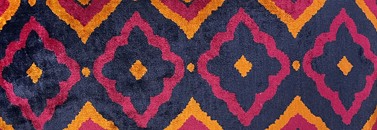
The large central space corresponds to the opening of the door, while the sunburst rosettes and plant scrolls surrounding it evoke vitality and abundance.
More than just a textile, these suzanis were a way of embellishing everyday life and transforming the threshold of the home into a veritable work of art.

Brand:

KA120145  -  427 x 203 cm
€5,500.00

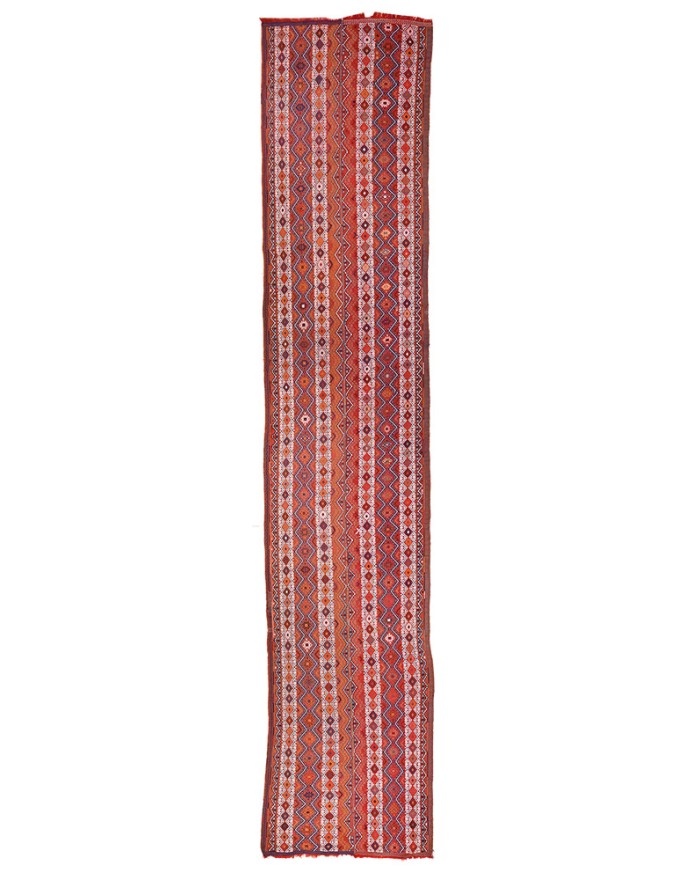
Kilim end of 19th century, from Malatya, center-east of Turkey - Weaved in two parts

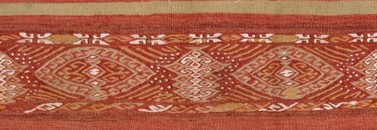
The kilims from this area are very fine and the pattern is very precise. Motifs of that one are both weaved and embroided. In the middle they are differents between the 2 parts and the bright white has been obtained with cotton.