

Your cart
There are no more items in your cart
- -40%
- New
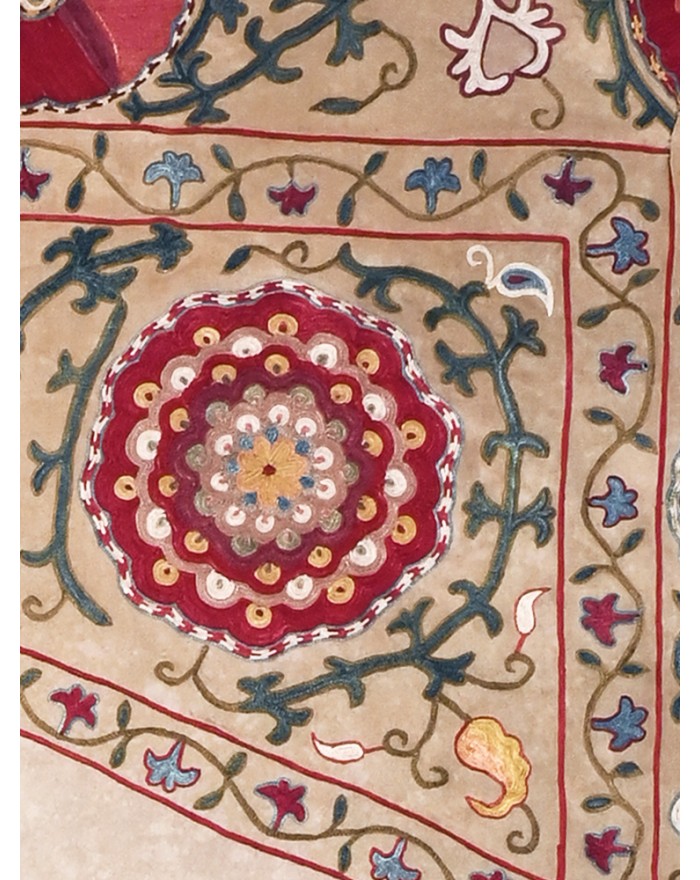
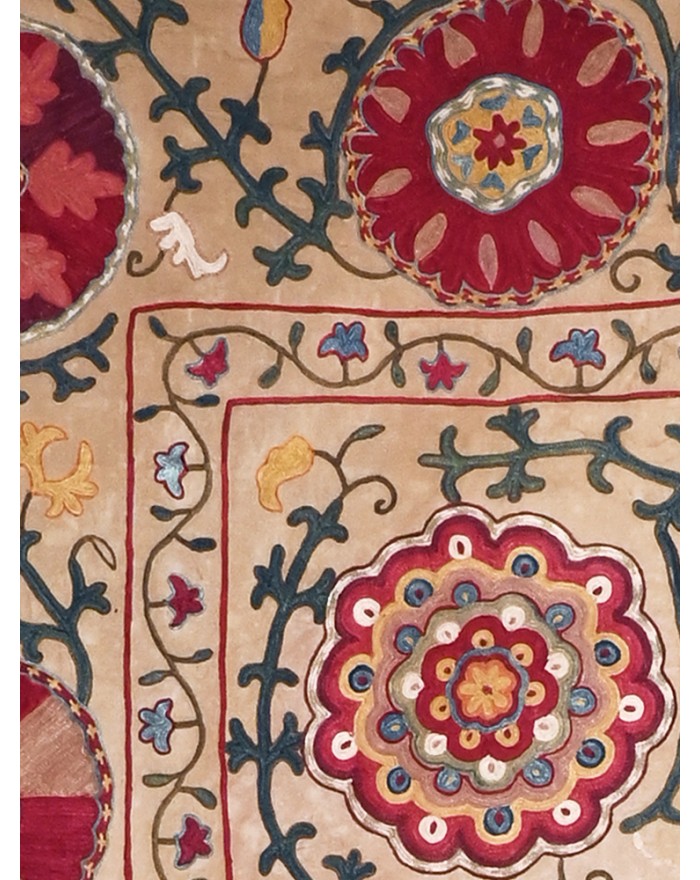
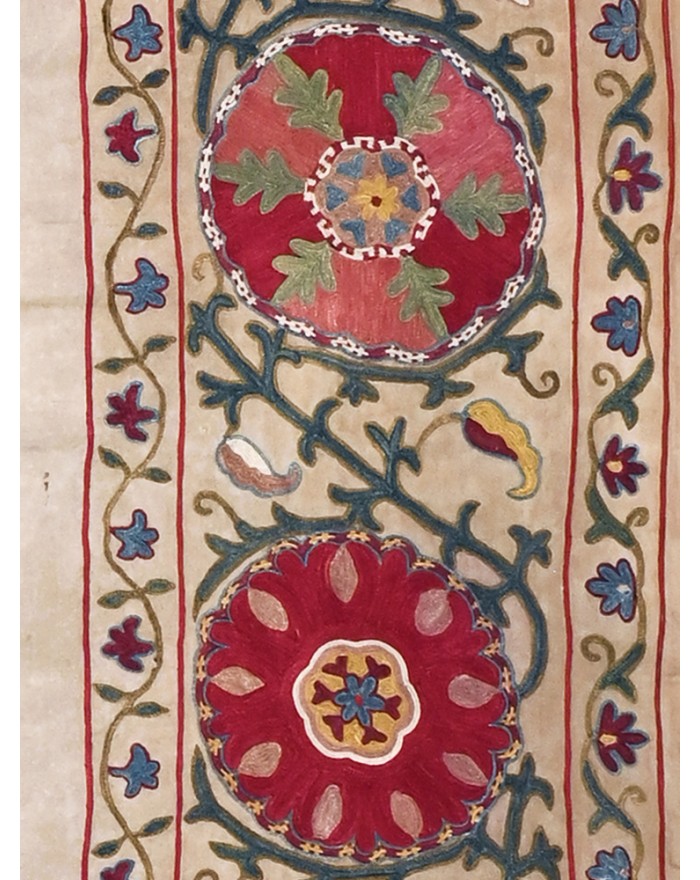
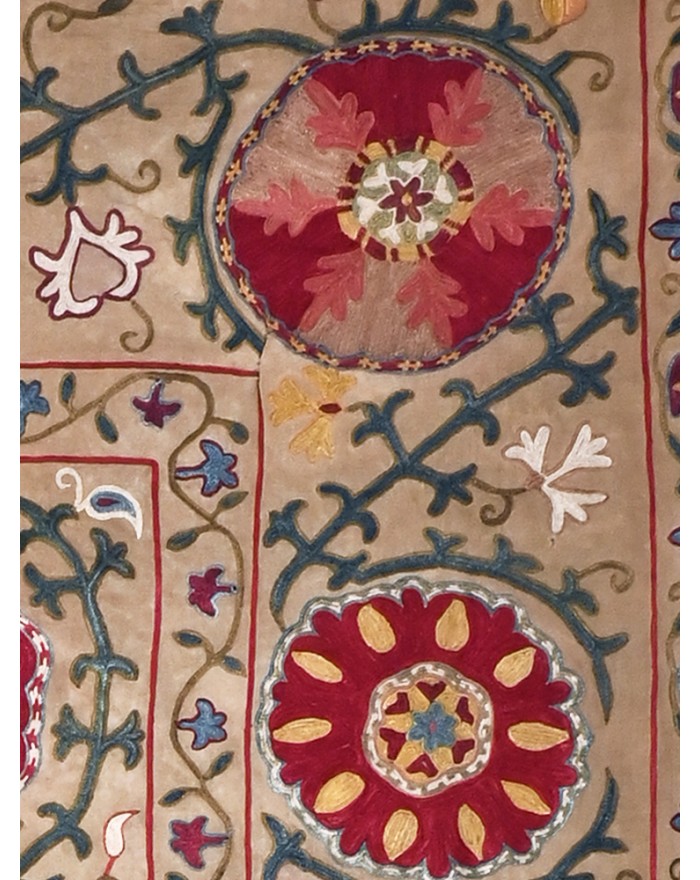

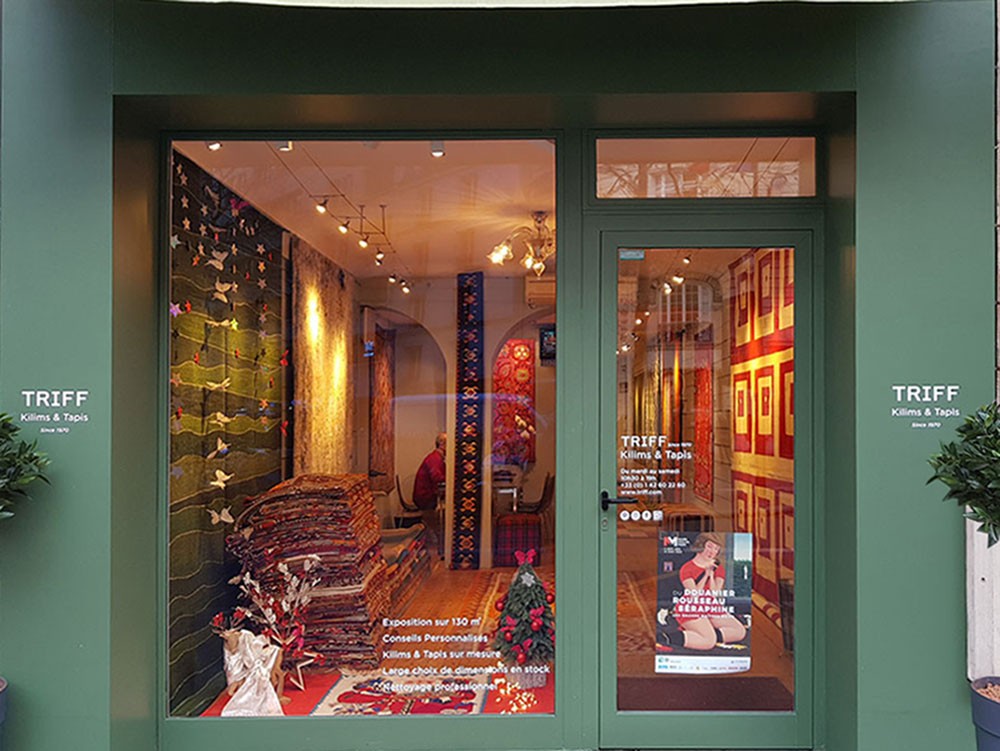
A specialist in kilims since the early 1970s, the TRIFF gallery has largely contributed to making these weavings known in France and Europe. Since its creation, the gallery has always favored the criteria of quality, authenticity, aesthetics and originality for the choice of its kilims.
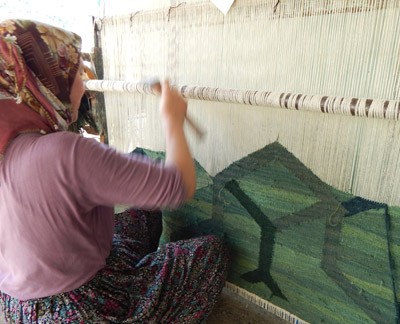
Do you know the ancestral art of the kilim? Find out more about this weaving technique that tells a beautiful story.
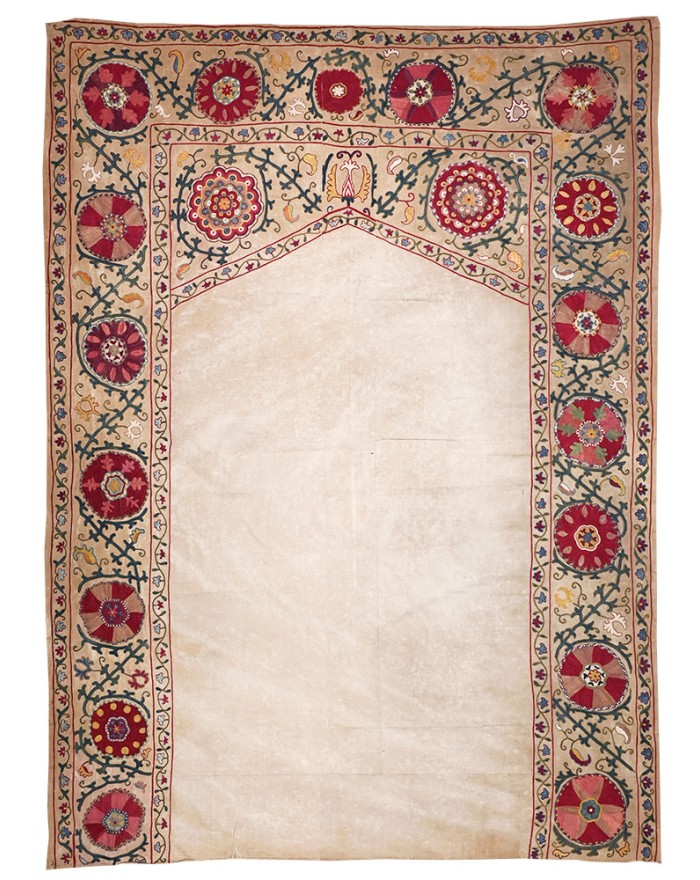
Suzani late 19th century,
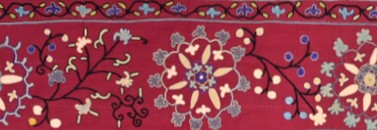
Used as a wedding cloth symbolizing a passage.These large suzanis, known as door curtains, were once hung at the entrance to houses in Uzbekistan. They served as curtains, protection from dust and sunlight, and also as decorations to welcome visitors.
Like many Central Asian textiles, they were part of a bride's trousseau. Hand-embroidered by several women in the family, they accompanied the start of a new life and symbolized protection, prosperity, and fertility.
The large central space corresponds to the opening of the door, while the sunburst rosettes and plant scrolls surrounding it evoke vitality and abundance.
More than just a textile, these suzanis were a way of embellishing everyday life and transforming the threshold of the home into a veritable work of art.
Suzanis are traditional decorative textiles originating in Central Asia, more specifically in the present-day regions of Uzbekistan and Tajikistan. Their name comes from the Persian word "suzan", meaning "needle". These works are famous for their intricate, colorful designs, often featuring floral motifs and sometimes animal motifs or solar symbols.
Handmade: suzanis are traditionally hand-embroidered by women. Embroidery techniques were often handed down from generation to generation within families. Mothers taught their daughters the art of embroidery from an early age. Suzanis were frequently embroidered as part of the preparation of the wedding trousseau.
Uses: Suzanis were traditionally used for interior decoration, notably as bedspreads, curtains, tablecloths, and sometimes as ceremonial garments.
Materials: Suzanis are generally made from fabric bases such as cotton, silk or velvet, and embroidered with silk or cotton threads.
Data sheet
You can shake them to remove dust.
Because of the materials used, these items are fragile.
If necessary, dry cleaning should be preferred.
No comment at this time.
You Must Login To Review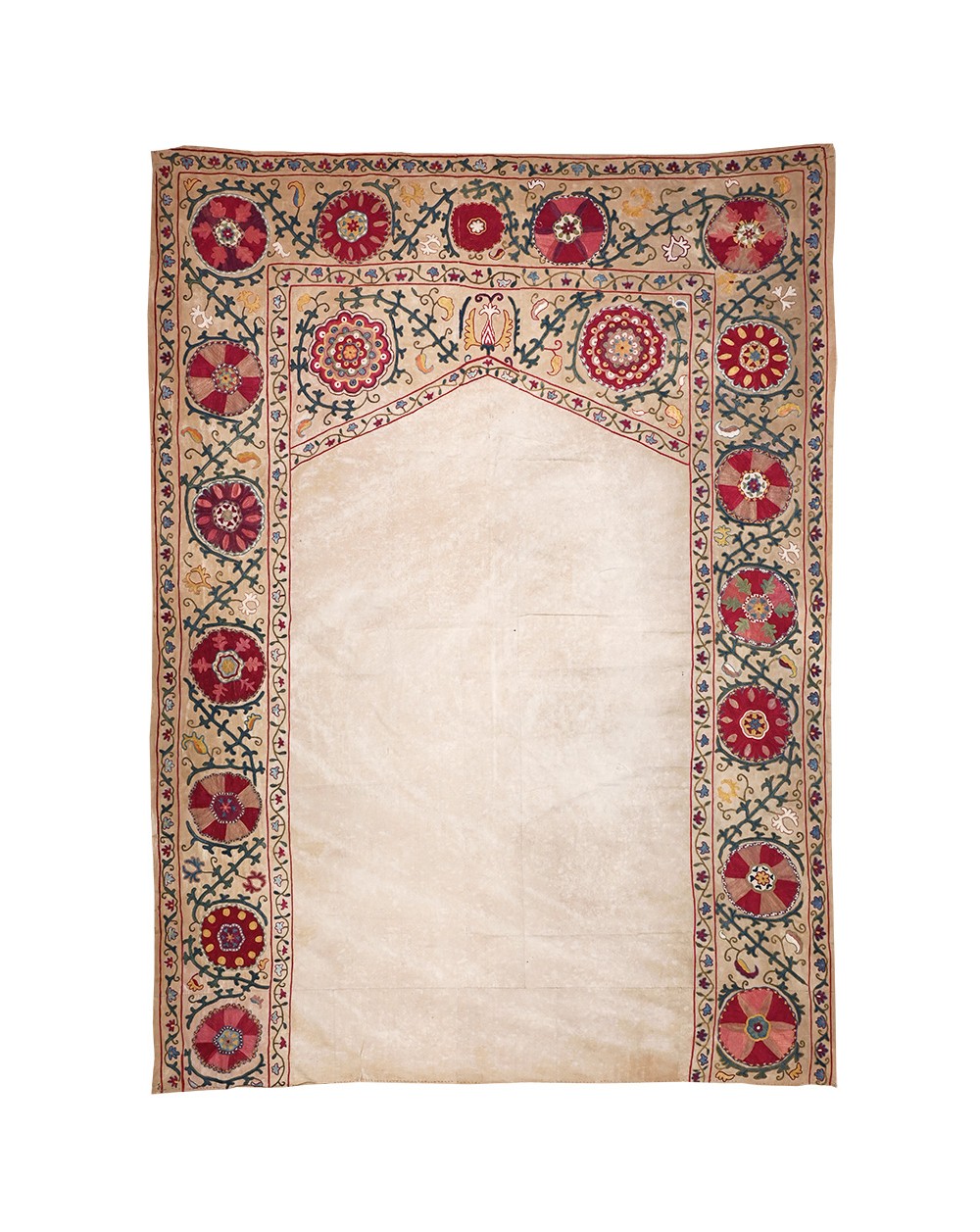
Suzanis are traditional decorative textiles originating in Central Asia, more specifically in the present-day regions of Uzbekistan and Tajikistan. Their name comes from the Persian word "suzan", meaning "needle". These works are famous for their intricate, colorful designs, often featuring floral motifs and sometimes animal motifs or solar symbols.
Handmade: suzanis are traditionally hand-embroidered by women. Embroidery techniques were often handed down from generation to generation within families. Mothers taught their daughters the art of embroidery from an early age. Suzanis were frequently embroidered as part of the preparation of the wedding trousseau.
Uses: Suzanis were traditionally used for interior decoration, notably as bedspreads, curtains, tablecloths, and sometimes as ceremonial garments.
Materials: Suzanis are generally made from fabric bases such as cotton, silk or velvet, and embroidered with silk or cotton threads.